I thought my sister had opened her heart to a child who desperately needed a family. Then I overheard a single sentence that made me wonder whether compassion was only part of the truth.
Sunday dinners at my parents’ house always had roasted chicken and the lemon candles my mom kept lighting even though nobody asked her to. That particular Sunday, a few months back, started like any other.
Then my older sister, Ellie, set down her fork, glanced at her husband, Henry, and cleared her throat the way she used to before school presentations.
“So,” she said, “Henry and I have been talking. We want to adopt.”
For a second, nobody moved.
“Henry and I have been talking.”
Our mom, Veronica, put a hand over her mouth. Dad squeezed Ellie’s wrist.
I just sat there blinking because my 40-year-old sister had spent the last decade telling anyone who’d listen that kids weren’t in the plan for them.
“Are you serious?” I finally asked.
“Completely,” Henry said, smiling that shy smile of his.
“Are you serious?”
Mom started crying happy tears, the kind she saved for weddings and graduations.
She kept saying, “Oh, sweetheart, oh, sweetheart,” as if the words had somehow gotten stuck.
I remember feeling so proud of my sister that I could barely finish my plate.
Ellie had always been the brave one. If she was doing this, she meant it.
Mom started crying.
***
A few months later, Ellie brought the little girl over to meet us.
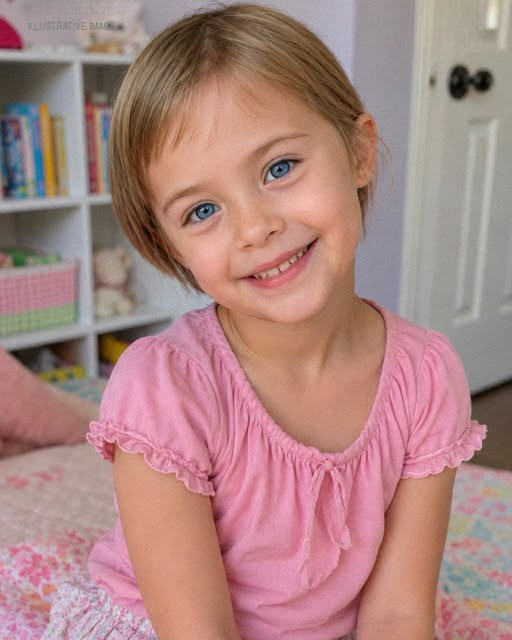
Her name was Gabriella. She was five years old, thin as a whisper, and she clutched a stuffed rabbit against her chest as if it might float away.
Her cheeks had that hollow look I’d only ever seen in hospital brochures. And she looked tired.
But when Mom knelt and said hello, little Gabriella gave the softest, shyest little smile.
She clutched a stuffed rabbit.
“Hi, sweetheart,” Mom said, her voice cracking. “Aren’t you the prettiest thing?”
Gabriella hid her face in the rabbit.
Ellie watched her for a long moment, then looked up at all of us with an expression I didn’t recognize.
“There’s something you should know,” she said quietly. “Gabriella has stage 4 cancer. The doctors have given her about a year. Even with treatment.”
Ellie watched her for a long moment.
Dad set his coffee down so slowly I could hear the ceramic touch the wood.
“Ellie,” Mom whispered.
My sister just smiled.
I stood up before I even realized I was doing it, and I pulled my sister into the hallway.
“El,” I said the second we were out of earshot, “why her? Out of every child in the system, why did you and Henry pick a little girl who’s…”
I couldn’t finish the sentence. I didn’t have to.
I pulled my sister into the hallway.
Ellie looked at me steadily, calmer than I’d ever seen her.
“She just happened to be the child my husband and I chose,” she said. “And we’re going to fight for her life.”
“El, that’s a year. Maybe.”
“Then we fight for the year.”
I didn’t know what to say to that. I just pulled her into a hug and held on tight because whatever courage I had in my 32-year-old body, my sister clearly had 10 times more.
“Then we fight for the year.”
“You’re the bravest person I know,” I told her.
“I’m not brave,” Ellie said into my shoulder. “I’m just doing what I should.”
I didn’t understand what she meant by that. I filed it under exhaustion and moved on.
***
When we walked back into the living room, Mom was sitting on the couch with Gabriella tucked against her chest. She was holding that little girl so tightly, so fiercely, that Gabriella’s rabbit was squashed sideways between them.
“I’m just doing what I should.”
And Mom’s eyes didn’t have the happy tears from Sunday dinner.
They were glassy in a different way, as if she were somewhere else entirely.
Like she was looking at Gabriella and seeing somebody who wasn’t in the room.
I pushed the thought away. Emotion, I told myself, just high emotion.
I had no idea what my family had already set in motion.
They were glassy.
***
The weeks after that first meeting blurred into a rhythm I never expected to keep.
Ellie’s kitchen table became a command center, covered in notebooks, printouts, and business cards from oncologists I’d never heard of.
I drove Gabriella to appointments when my sister couldn’t.
I sat in waiting rooms with a coloring book on my lap and a five-year-old leaning against my shoulder.
I drove Gabriella to appointments.
Gabriella weighed barely anything.
She’d tuck her stuffed rabbit under her chin and hum little songs under her breath.
I’d have to turn my face to the window so she wouldn’t see me tear up.
***
Ellie was relentless. She called hospitals in Boston, Houston, and Seattle, seeking second opinions. She emailed researchers at odd hours and kept a spreadsheet of every specialist who said no.
Ellie was relentless.
“There has to be someone,” my sister kept saying.
“You’ve contacted half the country, El.”
“Then I’ll contact the other half.”
I’d never seen my sister like that.
Ellie had always been the calm one, the practical one, the sister who rolled her eyes at drama.
Now she was a woman lit from the inside by something I didn’t recognize.
Still, small things nagged at me.
“There has to be someone.”
***
Mom visited her granddaughter almost every day.
But she didn’t hold Gabriella the way a grandmother should. She hovered.
Our mom would sit across the room and watch that little girl with an expression I couldn’t read. Not tenderness exactly. Something heavier.
***
One afternoon I walked in from the garage and caught Mom whispering something urgent to Ellie by the sink. They both went still the second they saw me.
She didn’t hold Gabriella.
“Everything okay?” I asked.
“Fine,” Ellie said too quickly.
“Just tired, honey,” our mom added, patting my arm as she brushed past.
I brushed their weird behavior off.
Ellie was running on fumes. Mom was heartbroken over her grandchild. Of course, they were strained.
That’s the story I told myself.
Then yesterday happened.
“Everything okay?”
***
I’d stopped at the pharmacy to pick up Gabriella’s anti-nausea prescription and swung by Ellie’s house to drop it off.
I had the spare key my sister had pressed into my palm weeks earlier, and I let myself in the way I always did.
The house was quiet. I slipped off my shoes in the entryway and headed toward the kitchen, meaning to leave the paper bag on the counter and let Ellie nap if she was sleeping.
That’s when I heard her voice.
I let myself in.
Ellie was on the phone.
Her tone was low and clipped, and something about it stopped me cold three steps from the kitchen doorway.
I pressed myself flat against the hallway wall.
“Mom, please calm down.”
A pause. I could hear our mom’s voice through the receiver, high and shaking, though I couldn’t make out the words.
“No one can ever know why I really adopted Gabriella.”
Her tone was low.
My hand tightened around the pharmacy bag until the paper crinkled. I held my breath.
“No, she doesn’t suspect anything. Neither does my husband.”
I didn’t move.
My sister went quiet for a long moment. When she spoke again, her voice had dropped even lower, almost to a whisper, and there was a cold, exhausted grief in it that I’d never heard from her before.
“She doesn’t suspect anything.”
“You know what happened back then, Mom. I’ll never forget that rainy night 25 years ago.”
My blood ran cold.
“I’m not doing this to hurt you, Mom,” Ellie said. “I’m doing this because it’s the only thing that will help.”
Another pause.
“Just, please. Don’t call Henry or Hilda. Let me handle it.”
I heard her set the phone down on the counter. I heard her exhale, the shaky, drawn-out breath of a person who’d been holding herself together for weeks.
“I’m not doing this to hurt you.”
I backed away from the wall, one careful step at a time. My socks made no sound on the wooden floor.
I retreated all the way to the entrance. I slipped my shoes back on with fingers that wouldn’t cooperate, tucked the pharmacy bag under my arm, and eased the front door open.
I closed it behind me without a click.
Outside, the afternoon light felt too bright.
I retreated.
I sat in my car with my hands on the steering wheel and stared at nothing.
A rainy night. Twenty-five years ago. I would’ve been what, seven?
I couldn’t think of a single rainy night from my childhood that had ever felt important. But something had happened, something my mom and my sister had carried in silence for a quarter of a century.
And a five-year-old girl with cancer was somehow at the center of it.
But something had happened.
I turned the key and drove home slowly, wondering what on earth my family had gotten itself into.
***
I didn’t sleep that night. I sat on the edge of my bed with my phone face down, replaying Ellie’s voice on that call until the words wore grooves into my head.
Rainy night. Twenty-five years ago. No one can ever find out.
By dawn, my mind had built a story I hated.
I didn’t sleep that night.
Maybe Henry had a hidden past, and Gabriella was biologically his. Maybe there had been another woman, a quiet arrangement, and my sister had spent months pretending to be a saint while cleaning up someone else’s mess.
But those speculations didn’t explain the rainy night 25 years ago that Ellie mentioned.
***
I drove to my parents’ house before I could talk myself out of it.
Those speculations didn’t explain the rainy night.
***
Mom was in her robe, coffee in hand. She frowned the second she saw me.
“Mom, please sit down,” I said.
“Hilda, honey, what are you doing here? It’s early.”
“I heard Ellie on the phone yesterday. She said no one could ever find out the truth about why she adopted Gabriella. She said you know what happened back then. What happened back then, Mom?”
“What are you doing here?”
Mom’s mug shook in her hand. She set it down before it spilled.
“That isn’t my story to tell you,” she whispered.
“Then whose is it?”
“Ellie’s. Please. Go talk to your sister.”
She wouldn’t look at me. She just kept touching the collar of her robe as if she were trying to steady herself. That made me stop pushing.
I got back into my car.
“Then whose is it?”
***
Ellie opened the door in an old cardigan with a laundry basket on her hip.
Gabriella was napping on the couch under a blanket, her stuffed rabbit tucked under her chin.
“Hilly? I wasn’t expecting you.”
“We need to talk.”
She glanced at Gabriella, then nodded me toward the kitchen. She kept folding tiny leggings and tiny socks, her hands moving as if she couldn’t afford to stop.
“We need to talk.”
“I was here yesterday,” I said. “I let myself in. I heard you on the phone with Mom.”
My sister’s hands paused.
“I heard you say no one could find out why you adopted Gabriella. I heard you talking about a rainy night. Ellie, I’ve been up all night imagining things I don’t want to imagine. Please, just tell me.”
“Hilda, don’t…”
“Is she Henry’s? Did something happen? I need to know what my family is caught up in.”
“Please, just tell me.”
Ellie sat down slowly. She pressed both hands flat on the table.
“It isn’t what you think,” she said. “It isn’t anything close to what you think.”
“Then tell me.”
My sister looked toward the living room, at the little chest rising and falling under the blanket, and her eyes filled with tears.
“It isn’t what you think.”
“You were seven years old,” she began. “I was 15. Mom was driving me home from piano lessons. It was pouring. A young woman stepped off a curb, and Mom couldn’t stop in time.”
My stomach churned.
“She died?”
“Right there. Cameras helped rule it unavoidable. Mom was never charged. But Hilda, she was never the same either. You were too little to remember, but I watched her fall apart for years. She’d cry at stoplights. She’d stop breathing when it rained.”
“Mom couldn’t stop in time.”
“Mom killed someone?”
“Mom was in an accident,” Ellie said. “There’s a difference. It wasn’t her fault. But she never believed that.”
“What does this have to do with Gabriella?”
Ellie wiped her face with the back of her wrist.
“She never believed that.”
“That young woman had a baby daughter. That daughter grew up. She had a child of her own. I’d been quietly keeping track of that family for years, Hilda, from a distance, just making sure they were okay. Then last year Gabriella’s mother got sick and passed away, and Gabriella went into foster care with a stage 4 diagnosis and no one to fight for her.”
I couldn’t speak.
“When I saw her file, and I saw her face, I knew it was time.”
“Ellie…”
I couldn’t speak.
“I didn’t do it out of pity. I didn’t do it to trade one debt for another. I did it because that little girl deserved a mother who would go to war for her, and the world had already taken her matriarchs away twice.”
“Why didn’t you tell Henry?”
“Because I wanted him to love her for who she was. Not for a story. Not for something we owed.”
“And me?”
She reached across the table.
“Why didn’t you tell Henry?”
“Because you never asked to carry any of this. You were a little child. You’ve had a clean version of Mom your whole life. Why would I hand you a stain that isn’t yours?”
I looked past her into the living room, at Gabriella asleep with her rabbit, and I understood that everything I thought I’d walked into had been the wrong shape entirely.
Not a scandal. A quiet, stubborn act of love.
“You were a little child.”
And I realized my sister had been carrying it alone for far too long.
***
I sat with what Ellie had told me for a full day before I returned to her house.
I couldn’t shake the image of Gabriella asleep on the couch, her stuffed rabbit tucked under one arm.
***
When my sister opened the door, I didn’t wait for pleasantries.
I returned to her house.
“You can’t keep carrying this by yourself,” I said. “Henry deserves to know, so you’re not alone in it.”
Ellie’s shoulders dropped. “I’m scared he’ll look at her differently.”
“He won’t. But he might look at you differently if he finds out some other way.”
She was quiet for a long moment, then nodded.
“You can’t keep carrying this.”
***
That evening, I sat beside Ellie on the couch while she told her husband everything.
Henry didn’t speak for what felt like forever. He just stared at his hands.
Then he reached for Ellie’s fingers.
“The reason doesn’t change what she already is,” he said softly. “She’s our daughter. That’s it.”
My sister broke down, and I quietly stepped into the hallway to give them room.
Henry didn’t speak.
***
Three weeks later, a specialist from a hospital two states over called Ellie back. Gabriella was accepted into a clinical trial.
***
Months passed. Gabriella started gaining weight. Her laughter grew louder.
She chased bubbles in the backyard one afternoon while Mom watched from the porch, and I noticed something I hadn’t seen on my mom’s face in years.
She looked light.
Her laughter grew louder.
“She loves it here,” Mom whispered when I sat beside her.
“She’s home,” I said.
Ellie came out with lemonade and sat on the step below us. None of us said anything for a while. We didn’t need to.
My sister hadn’t adopted Gabriella to bury a secret.
She’d adopted her to give a little girl back the mother the world had taken, and somehow she’d given all of us a way to breathe again.