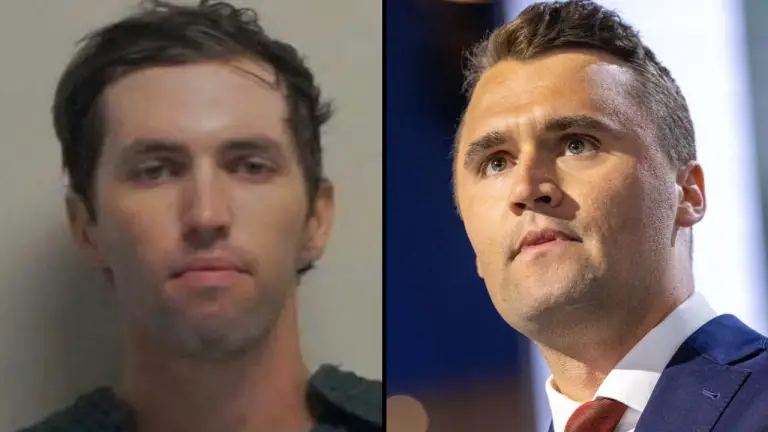
A bombshell twist is rocking the Charlie Kirk trial following his assassination last year.
When Charlie Kirk was shot dead in front of a crowd at Utah Valley University on September 10, 2025, it sent shockwaves across America.
The founder of Turning Point USA and one of the most prominent faces of the MAGA movement had been assassinated in broad daylight, mid-speech, at what was supposed to be a celebratory conservative campus tour.
Within days, a 22-year-old named Tyler Robinson had been arrested. The case seemed, to many, to be open and shut.
Now, months later, a startling new development is casting significant doubt on one of the prosecution’s most fundamental assumptions — and the trial just got a great deal more complicated.
Who was Charlie Kirk?
To understand the magnitude of what happened that September afternoon, you need to understand who Charlie Kirk was and what he represented.
Born in Arlington Heights, Illinois in October 1993, Kirk grew up politically engaged from a young age, listening to conservative talk radio in middle school and contributing to outlets like Breitbart as a teenager.
He made his first TV appearance on Fox Business at just 17. When he left college after a single semester, it wasn’t to drift — it was to co-found Turning Point USA, the conservative student organization he built into one of the most influential political groups in America alongside businessman Bill Montgomery.
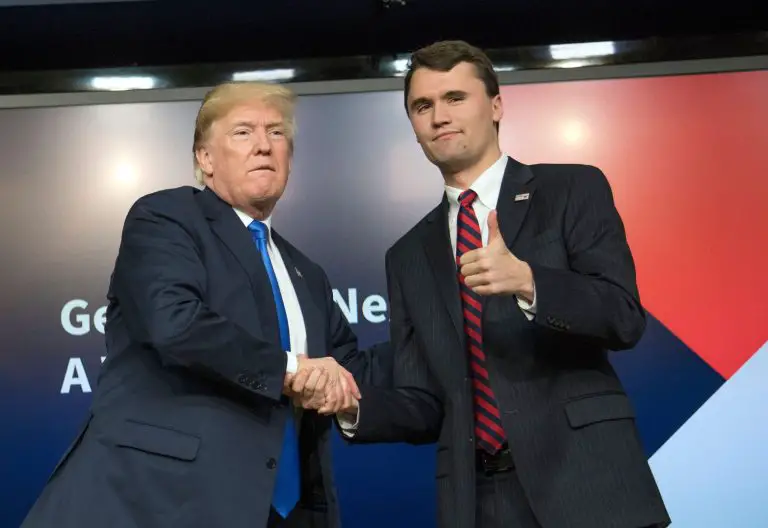
Kirk became a fixture of the Trump movement, appearing at rallies, hosting a widely listened-to podcast, and making himself a near-constant presence on conservative media.
He was beloved by the MAGA faithful and equally loathed by those who opposed his politics.
Critics pointed to a 2023 Brookings Institution study finding that his podcast ranked second among 79 prominent political podcasters for the proportion of false, misleading, and unsubstantiated statements. His views on abortion, DEI, COVID-19, and the 2020 election were regularly contested.
But on September 10, 2025, whatever one thought of Charlie Kirk politically became secondary to a single brutal fact: he had been shot in the neck while speaking at an outdoor American Comeback Tour event at Utah Valley University in Orem, Utah.
The video spread instantly across social media. He died from his injuries. He is survived by his widow, Erika Kirk, and their two children, with Erika subsequently stepping into the role as the face of TPUSA.
The man charged with his murder
Tyler James Robinson, then 22 years old, was arrested in connection with the killing and charged with aggravated murder — a capital offense.
Prosecutors have said Robinson traveled three hours to reach the university specifically to carry out the attack. According to prosecutors, he texted his romantic partner that he had targeted Kirk because he had ‘had enough of his hatred.’
The rifle allegedly used in the shooting — a Mauser Model 98 in .30-06 caliber — had reportedly been gifted to Robinson by his grandfather.
According to prosecutors, per WIO News, when police released images of the weapon during the manhunt that followed, Robinson’s own father recognized it and contacted law enforcement. His father reportedly helped secure Robinson until officers arrived.
Prosecutors say the evidence against Robinson is substantial. DNA consistent with his profile was reportedly found on the trigger of the rifle, on the fired cartridge casing, and on two unfired cartridges.
Messages between Robinson and his roommate, Lance Twiggs, reportedly show him discussing leaving the rifle behind, worrying about fingerprints, and trying to figure out how to explain the missing weapon to his father.
Friends have told prosecutors he made jokes about violence during drunken moments and had been exposed to extremist views.
Robinson has not yet entered a plea. Prosecutors are seeking the death penalty.
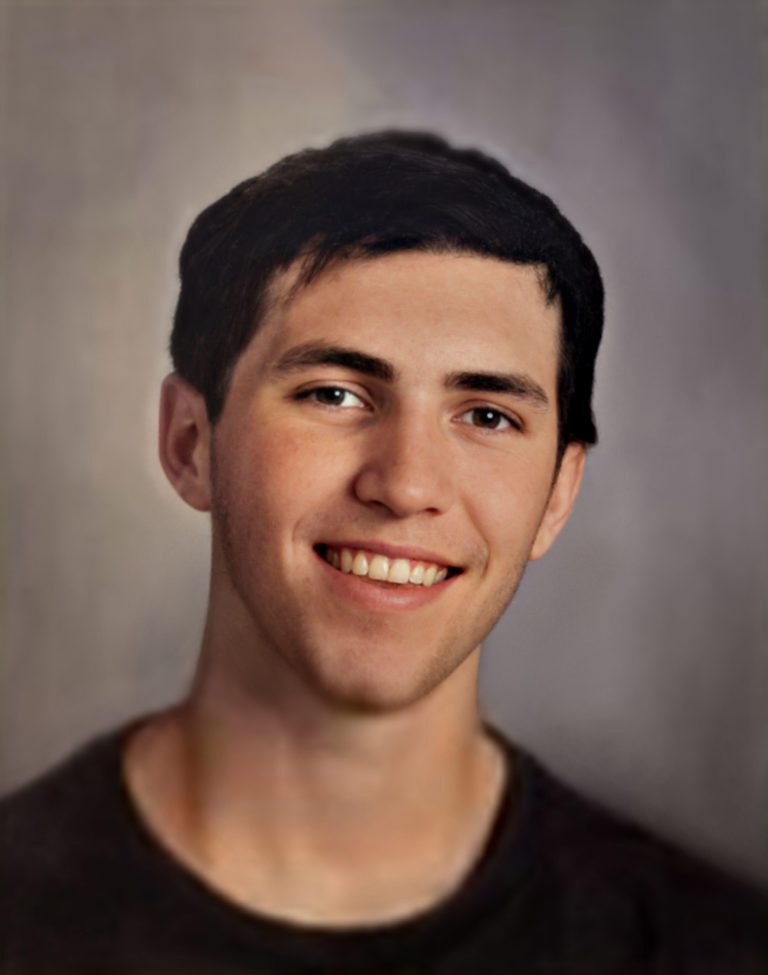
Tyler James Robinson, then 22 years old, was arrested in connection with the killing and charged with aggravated murder. Credit: Alamy
Conspiracy theories and resignation letters
The case has attracted its share of controversy beyond the courtroom.
Earlier this month, Joe Kent — Donald Trump’s former counter-terrorism chief, who resigned from his post on March 17 — appeared on The Tucker Carlson Show and raised eyebrows by suggesting that key lines of inquiry into Kirk’s killing had been deliberately shut down.
Kent claimed that the National Terrorism Center, which he had been part of, was stopped from continuing to investigate the shooting.
“We’ve been told that this individual — Robinson — is a lone gunman, and maybe he is,” Kent said. “But there was still a lot for us to look into that I can’t really get into.” A law enforcement source subsequently denied Kent’s account and alleged he had made repeated claims without evidence.
Kent’s resignation itself was also dramatic. His departure letter, released publicly, accused the Trump administration of entering the war with Iran under false pretenses, claiming that Iran posed ‘no imminent threat’ to the US and that the administration had been misled by Israeli pressure.
The White House dismissed the letter, saying it had ‘compelling evidence’ that Iran had been planning to strike first. Trump himself described Kent as a ‘nice guy’ who was ‘weak on security.’
The bombshell in the courtroom
But the most significant development in the Kirk case came not from a resignation letter or a podcast appearance — it came from the courtroom itself, in the form of a new court filing submitted this week, the Independent reports.
Robinson’s defense attorneys have formally requested a postponement of a preliminary hearing currently scheduled for May, citing the sheer volume of material they need to review — approximately 20,000 files of evidence — and one finding in particular that they believe could have a significant impact on the entire case.
According to the defense, an analysis conducted by the Bureau of Alcohol, Tobacco, Firearms and Explosives could not conclusively connect the bullet fragment recovered during Kirk’s autopsy to the rifle found near the scene.
The ATF’s full report has been kept private, per Politico, but Robinson’s legal team has cited excerpts quoted in other public court documents confirming that the results were inconclusive. The FBI is now conducting additional testing, according to court filings.
The defense has indicated it may seek to use the ballistics finding to argue for Robinson’s innocence at the preliminary hearing itself — a stage at which prosecutors simply need to demonstrate there is sufficient evidence to proceed to trial.
Why ballistics matters
To understand why this development is so significant, it helps to understand how forensic ballistics actually works.
When a bullet travels through the barrel of a gun, the metal of the barrel leaves microscopic scratches on the surface of the bullet — unique markings that, like fingerprints, are specific to that individual firearm.
In theory, a forensic analyst can compare those markings on a recovered bullet or fragment against a suspect weapon and determine whether they match.
But the process depends enormously on the size and condition of the recovered fragment.
A small, deformed, or degraded piece of bullet may not retain enough of those microscopic markings to allow for a conclusive comparison.
If the fragment recovered from Kirk’s autopsy was in poor enough condition, the ATF simply may not have been able to say definitively whether it was fired from the rifle found at the scene.
The defense is also pressing on the DNA evidence, noting that forensic reports indicate multiple people’s DNA profiles were found on some of the key items.
The attorneys argue this requires a more complex analytical approach than the prosecution has acknowledged, and they are pushing for the court to compel prosecutors to hand over a range of additional materials, including social media data, officer testimony, and statements from Robinson’s family and roommate.
Robinson is due back in court on April 17 for a separate hearing on a defense motion to ban cameras from courtroom proceedings.
The preliminary hearing, currently scheduled for May, is the stage at which a judge will determine whether prosecutors have presented sufficient evidence to send the case to trial.
Whether the bullet discrepancy ultimately proves decisive remains to be seen. Prosecutors still have the DNA evidence, the reported confession to his father, the alleged text messages, and witness accounts of Robinson’s behavior and statements in the period leading up to the shooting.
But the inconclusive ballistics report has handed the defense a tangible opening — and in a death penalty case, any opening matters enormously.