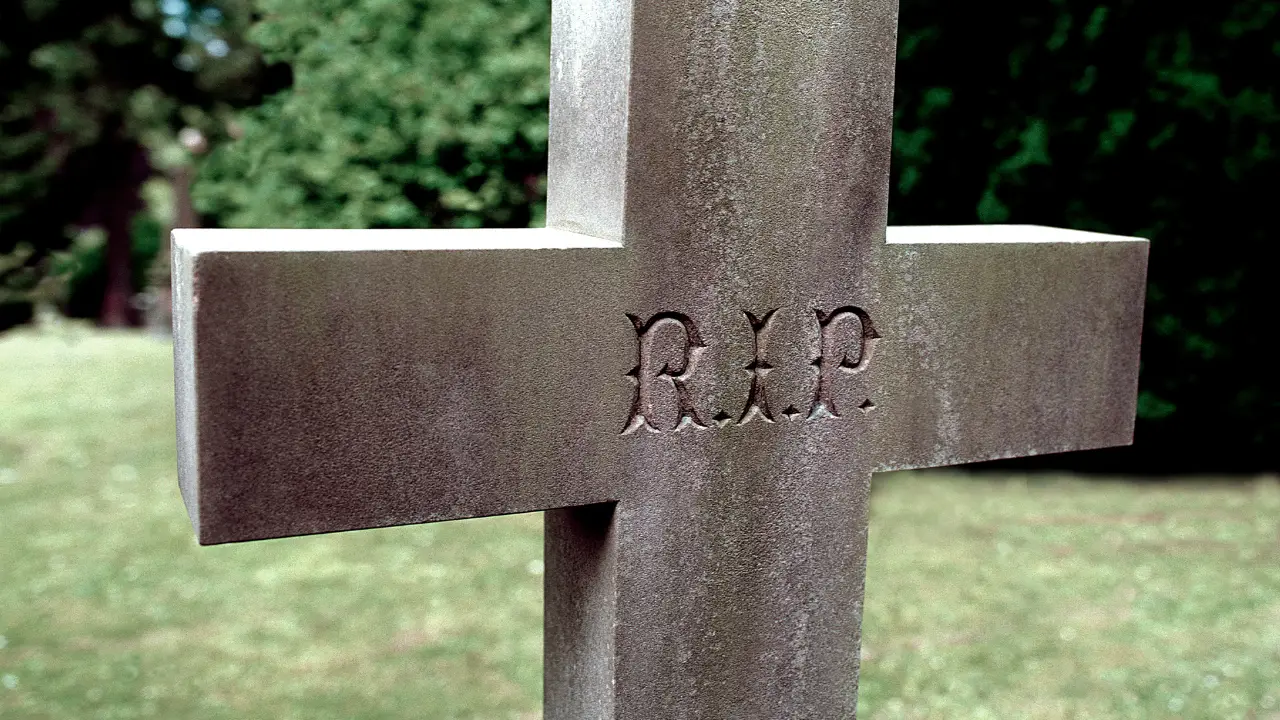
The internet is only just realizing what RIP actually stands for, and it’s safe to say they’re shocked.
For as long as there have been gravestones, we’ve seen RIP etched on them, a simple string of letters that seems to say everything and nothing at once.
Many of us assume it’s an abbreviation for ‘rest in peace,’ the comforting phrase we use when someone dies. But what if centuries of using the expression have quietly buried its real meaning?
More and more people are discovering that RIP doesn’t originally come from English at all – and that its origins go much deeper.
At first glance, RIP seems obvious. No one questions it. But if it truly stood for the English phrase ‘rest in peace,’ then why have other non-English-speaking countries been using it for centuries too?
The answer is simple, but unexpected. According to etymologists, including the Merriam-Webster dictionary, RIP actually stands for something else entirely.

Why people are surprised (and a little disappointed)
The surprise for many isn’t that RIP means ‘rest in peace,’ but that those letters didn’t originally stand for that English phrase.
This distinction caught attention on social media after teacher Laurie Knox (@knoxstudy) shared how many everyday abbreviations actually come from Latin.
In a Facebook video, Knox explained that AM and PM come from ante meridiem and post meridiem, meaning ‘before noon’ and ‘after noon,’ while ‘etc.’ is short for et cetera, which means ‘and so on.’
Users were left mind-blown by the realization that words they use every day have such ancient origins.
The video sparked hundreds of comments from people who suddenly saw their everyday vocabulary in a completely different light.
Users were left mind-blown by the realization that words they use every day have such ancient origins.
One follower commented:”RIP was a new one for me,” while another admitted: “I didn’t know RIP!”
Many admitted they’d never stopped to consider where these familiar abbreviations actually came from, assuming they were simply English shorthand created for convenience.

Why people had mixed reactions
The revelation left plenty of people confused – and slightly disappointed.
One Facebook user joked: “So RIP doesn’t stand for ‘Rise If Possible?’”
For others, however, this was hardly news. Fans of the video game Assassin’s Creed were way ahead of the curve.
Several installments of the series are set in Renaissance Italy, where Latin phrases appear throughout the game.
Gamers flooded Knox’s comments with GIFs from the game, as if sharing a secret only they were in on.
“Ezio taught me the original RIP phrase,” one user commented, referring to the Italian protagonist of Assassin’s Creed II.
The divide between those who knew and those who didn’t highlighted an interesting cultural split.

While some people learned about Latin origins through traditional education, others picked up the same knowledge through entertainment and gaming, proving that learning can happen anywhere, even while wielding virtual hidden blades in 15th-century Florence!
So there you have it: proof that playing video games isn’t nearly as useless as some people think. Next time someone tells you to get off the screen, just say you’re studying Latin.
Who knows what other historical gems are hidden in your favorite games, waiting to surprise you with centuries-old wisdom disguised as entertainment?
What RIP actually stands for
So what does RIP really stand for? The common phrase we think of, ‘rest in peace,’ is essentially a translation, but it’s not what the letters originally represented.
The phrase actually traces back to a Latin phrase used in early Christian burial rites.
RIP comes from the Latin requiescat in pace, which literally means ‘may he or she rest in peace.’ The key difference is that the Latin phrase is a prayer, rather than a simple statement of fact.
Pop Culture Dictionary says the expression began appearing on Christian tombstones around the 8th century, particularly within the Roman Catholic Church. It originated as a prayer for the soul of the deceased to find eternal peace.

Over time, the phrase spread throughout Europe and eventually made its way into the English language.
The Latin version remained standard across different countries and cultures because Latin was the universal language of the Church during medieval times.
This explains why you’ll find the same three letters on gravestones from Ireland to Italy, from Spain to Poland – all rooted in the same ancient blessing.
The phrase’s religious significance was deeply important to early Christians, who believed that praying for the dead would help their souls achieve salvation and eternal rest.
What we now use casually in text messages and social media posts was once a solemn invocation with profound spiritual meaning.
The next time you see those three simple letters on a gravestone or use them in a message, you’ll know there’s far more history packed into that tiny abbreviation than meets the eye.